Root Canal Treatment Procedure Step by Step Coimbatore
If you are experiencing a painful sensation, sensitivity, swelling of the gum, or pain while eating, there may be a problem within the tooth. Root canal treatment procedure step by step Coimbatore can ease your worries about what is involved in the process.
Located at PNR Layout on Trichy Road, Skyc line Dental is a clinic where people from Sungam Junction, Ramanathapuram, Race Course, and nearby places can undergo professional dental procedures conveniently and safely. The focus of this clinic is providing painless treatment, using advanced technology, and clear pricing, which enables patients to know what they are undergoing.
Root canal treatment is done mainly due to inflammation or infection of the pulp of the tooth.
What Is Root Canal Treatment?
Root canal treatment, also called endodontic treatment, is designed to treat infection or inflammation inside a tooth.
The innermost part of a tooth contains the pulp, which includes nerves and blood vessels. Deep decay, cracks, trauma, or repeated dental procedures can damage this tissue.
Without appropriate treatment, infection may spread into the tissues around the tooth and potentially result in an abscess.
The purpose of a root canal is to:
- Remove infected or inflamed pulp
- Clean and disinfect the root canals
- Seal the cleaned canals
- Preserve the natural tooth whenever possible
- Restore normal chewing function
The Indian Dental Association also notes that root canal treatment can be used to save an infected or damaged tooth that might otherwise require extraction.
Root Canal Treatment Procedure Step by Step
Understanding each stage can help patients feel more comfortable before visiting a dentist.
Step 1: Dental Examination and Diagnosis
The process begins with a detailed examination.
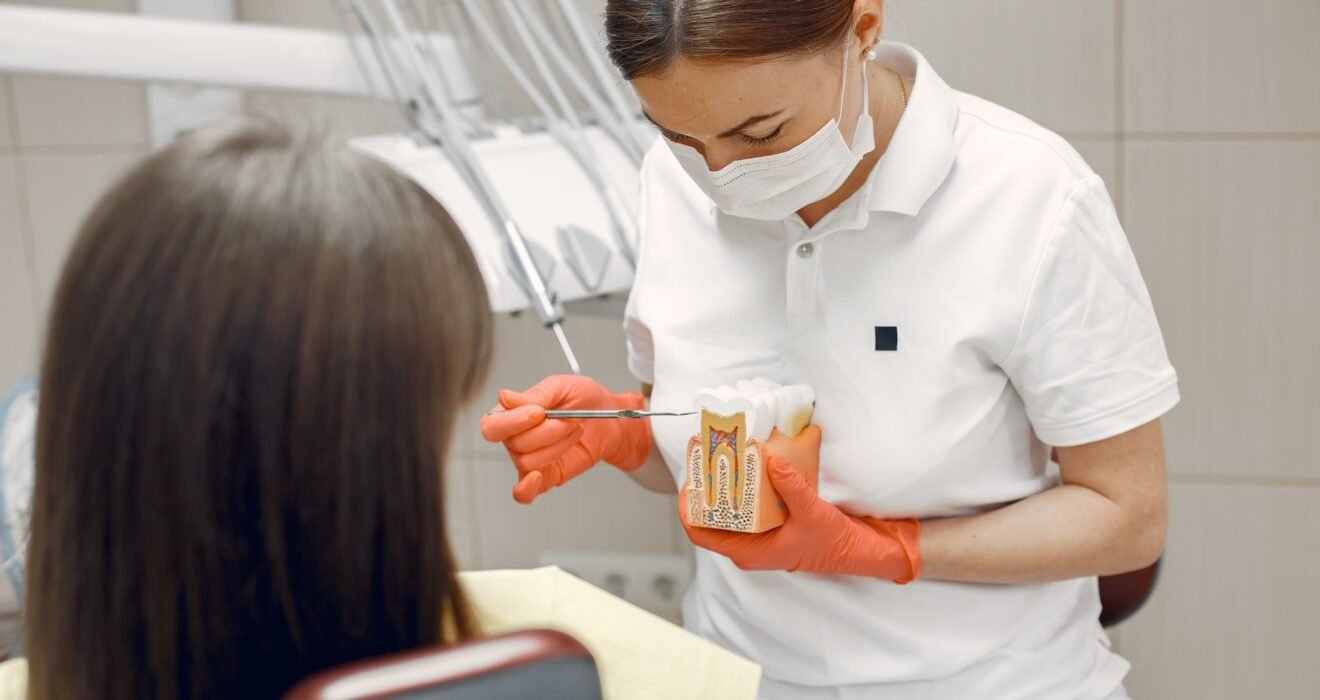
The dentist assesses the tooth, asks about symptoms, and may take dental X-rays. Imaging helps evaluate the roots, surrounding bone, and extent of infection.
Symptoms alone do not always determine whether a root canal is necessary. A professional examination is important because deep decay may sometimes be treated with a restoration rather than root canal therapy.
Step 2: Local Anaesthesia
Before treatment starts, local anaesthesia is administered around the affected tooth.
The objective is to numb the area so the patient remains comfortable throughout the procedure. Patients who feel anxious about dental injections can discuss their concerns with the dentist beforehand.
At Skyc Line Dental, the focus on painless dental treatments in Coimbatore is intended to make necessary dental procedures more comfortable and less intimidating.
Step 3: Isolating the Tooth
Once the tooth is numb, the dentist isolates it from the rest of the mouth.
A dental dam may be used to keep saliva away from the treatment area. Isolation helps maintain a clean working field during root canal treatment. The American Association of Endodontists describes dental-dam isolation as part of the standard procedure.
Step 4: Creating an Access Opening
A small opening is made through the top of the tooth.
This provides access to the pulp chamber and root canals. The dentist then carefully removes the diseased or infected pulp tissue.
Modern dental equipment can assist with visibility, precision, and efficient treatment planning.
Step 5: Cleaning and Shaping the Root Canals
This is one of the most important stages of the procedure.
Small specialised instruments are used to clean the canals and shape the internal spaces. Irrigating solutions help flush away debris and microorganisms.
The objective is to create a clean canal system that can subsequently be sealed. According to the Indian Dental Association, cleaning involves files used progressively within the canals, along with irrigation.
Step 6: Medication When Required
Not every root canal follows exactly the same schedule.
If there is significant infection or inflammation, the dentist may place medication inside the tooth and temporarily seal it. The patient may then return for another appointment.
In uncomplicated cases, root canal treatment may sometimes be completed in one visit, while more complex or infected teeth can require additional appointments.
Step 7: Filling and Sealing the Canals
After the canals have been properly cleaned and prepared, they are filled with a biocompatible material.
Gutta-percha, together with sealing cement, is commonly used to fill the prepared canals. This helps close the internal space and reduce the possibility of reinfection.
The access opening is then closed with a temporary or permanent restoration, depending on the treatment plan.
Step 8: Final Tooth Restoration
Root canal treatment addresses the infection inside the tooth, but the tooth may still need additional protection.
A tooth that has experienced extensive decay or structural damage may require a crown or another suitable restoration. This helps restore function and protect the remaining tooth structure.
The dentist will assess the tooth and recommend the appropriate restoration rather than automatically using the same option for every patient.
Is Root Canal Treatment Painful?
Fear of pain is one of the most common reasons patients delay dental treatment.
Modern root canal treatment is generally performed under local anaesthesia. The purpose is to numb the treatment area before the dentist works inside the tooth.
Some tenderness can occur after treatment, particularly when the tissues surrounding the tooth have already been inflamed. Patients should follow the dentist’s post-treatment instructions and report severe, persistent, or worsening symptoms.
At Skyc Line Dental in Sungam, the emphasis on painless treatments helps address one of the major concerns associated with root canal therapy.
How Many Visits Are Needed?
The number of appointments depends on the tooth and the extent of infection.
Some straightforward root canal treatments can be completed in one visit, while infected, complicated, or anatomically challenging teeth may require multiple appointments.
Factors that can affect treatment time include:
- Number and shape of root canals
- Severity of infection
- Presence of swelling or abscess
- Previous root canal treatment
- Difficulty locating or cleaning canals
- Amount of remaining tooth structure
A dentist can provide a more accurate treatment timeline after examination and imaging.
Why Choose Skyc Line Dental in Coimbatore?
For patients looking for root canal treatment procedure step by step Coimbatore, location, comfort, technology, and clear communication all matter.
Skyc Line Dental serves patients from PNR Layout, Sungam, Trichy Road, Sungam Junction, Ramanathapuram, and Race Course.
The clinic highlights:
- Painless treatments: A patient-focused approach designed to improve comfort during dental procedures.
- Modern technology: Contemporary dental equipment supports examination, diagnosis, and treatment.
- Transparent pricing: Patients can discuss the proposed treatment and associated costs clearly before proceeding.
- Convenient location: The clinic is situated in PNR Layout on Trichy Road, Sungam.
- Patient-focused care: Treatment planning is based on the condition of the individual tooth rather than a one-size-fits-all approach.
Transparent communication is particularly important in dental care. The Indian Dental Association’s professional guidance stresses truthful communication about treatment necessity and fees.
What Happens After Root Canal Treatment?
After the procedure, proper care of the treated tooth should be observed based on the dentist’s recommendations.
Prior to the completion of the restoration process, it may be necessary to refrain from placing much biting force on the tooth, depending on what the dentist advises.
With appropriate restoration, a root canal-treated tooth can continue to serve as a functional part of the dentition.
Proper oral hygiene and prompt attention to any additional dental issues can assist in preserving the treated tooth and adjacent teeth.
When Should a Dentist Be Consulted?
A dental appointment should not be delayed when symptoms suggest possible pulp or root infection.
Important warning signs can include:
- Persistent toothache
- Severe sensitivity to hot or cold
- Pain when biting or chewing
- Gum swelling near a tooth
- A recurring pimple or drainage near the gum
- Tooth discoloration
- A cracked or injured tooth
However, symptoms can vary considerably. A dental examination is needed to determine whether root canal treatment, a filling, another procedure, or extraction is appropriate.
Frequently Asked Questions
1. How long does a root canal treatment take in Coimbatore?
The duration varies according to the tooth, canal anatomy, infection, and treatment complexity. Some uncomplicated cases may be completed in one visit, while others require additional appointments.
2. Is root canal treatment better than removing the tooth?
When a natural tooth can be predictably saved, root canal treatment is intended to remove the diseased pulp while preserving the natural tooth. However, treatment suitability depends on the tooth’s condition and should be determined after a dental examination.
3. Where can patients get root canal treatment near Sungam Junction?
Skyc Line Dental is located at PNR Layout, Trichy Road, Sungam, Coimbatore, making it accessible to patients from Sungam Junction, Ramanathapuram, Race Course, and nearby areas.
Book a Dental Consultation at Skyc Line Dental
Toothache that continues for long must not be neglected and treated through temporary methods. A proper assessment from professionals could assist in identifying the underlying cause and the possibility of saving the natural tooth.
If you are looking for root canal treatment steps procedure Coimbatore, then choose Skyc Line Dental that offers patient centric care and focuses on painless treatment, advanced technology and clear pricing.
Contact Skyc Line Dental on +91 73392 53535 or drop in at PNR Layout, Trichy Road, Sungam, Coimbatore, India, to have a consultation for your dental issues.
Disclaimer: The information provided in this blog post is for general informational purposes only. While we strive to keep the content accurate and up to date, we do not guarantee its completeness, reliability, or accuracy. Any actions you take based on this information are strictly at your own risk. We are not responsible for any losses, damages, or inconveniences that may arise from the use of this blog. For professional advice, please consult a qualified expert.